Halloween parties are at their best when guests have something to do besides admire the decorations. A few well chosen games can help strangers start talking, give children a place to channel their excitement, and turn an ordinary gathering into a night people remember.
The ideas below work for home parties, classrooms, community events, and the office. Most require inexpensive supplies, and many can be adjusted for different ages, group sizes, and mobility levels.
Quick Halloween Party Games for Any Crowd
Costume Awards
Invite guests to show off their costumes, then let everyone vote in several upbeat categories. Try most creative, best homemade costume, funniest transformation, best group theme, and best use of recycled materials. Multiple categories spread the fun around and keep the contest from becoming too serious.
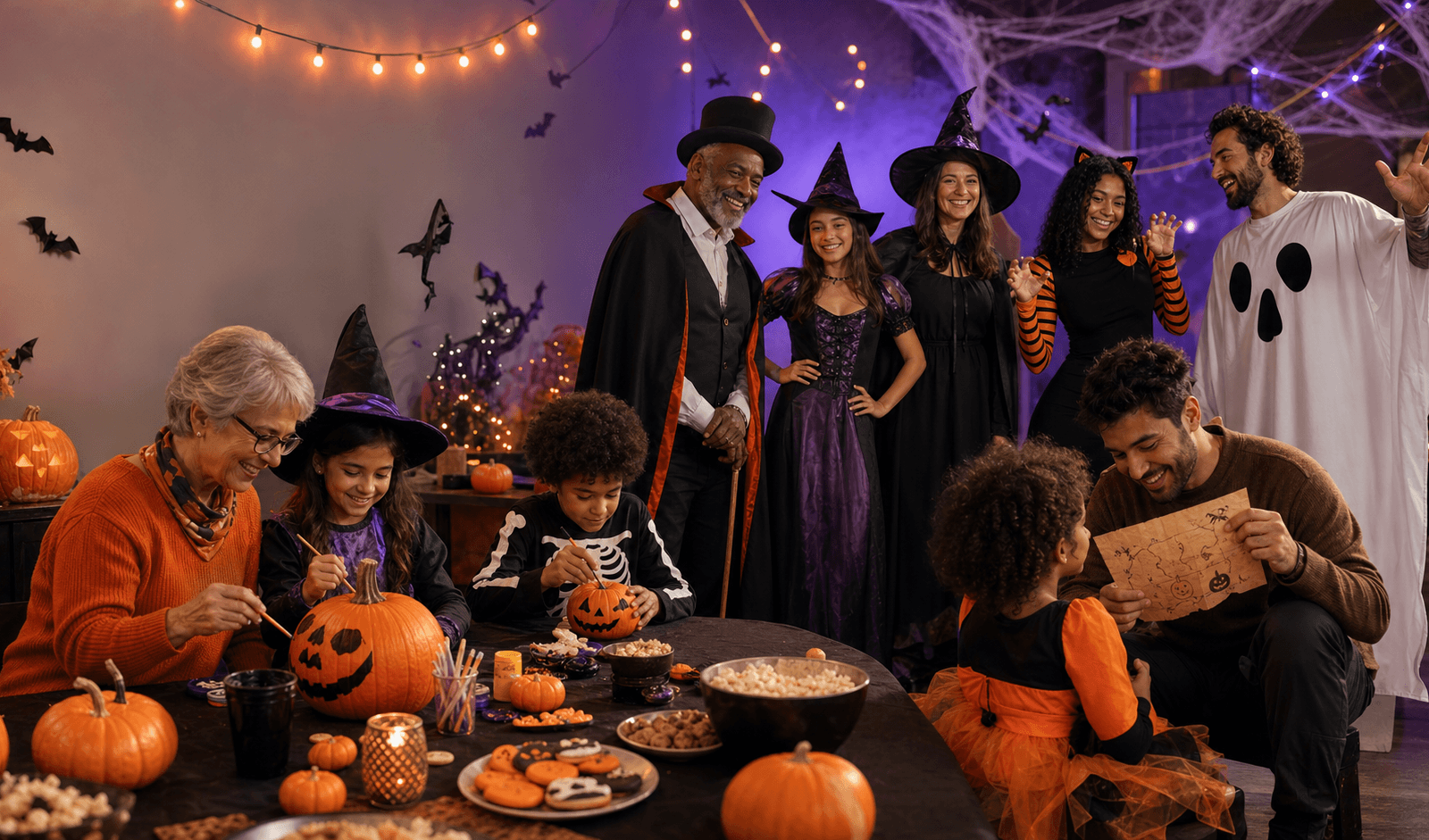
Pumpkin Decorating Studio
Set out washable paint, adhesive felt, stickers, ribbons, and markers so guests can decorate pumpkins without carving. Create a drying and display area, then award playful titles such as “Most Magical” or “Best Monster.” If you offer carving, give children a separate no‑cut station and keep sharp tools with responsible adults.
Haunted Scavenger Hunt
Hide seasonal objects or clue cards around the party space. Teams might search for a tiny skeleton, a striped sock, a black feather, or a pumpkin marked with a moon. For younger players, use pictures instead of written clues. For adults, connect the clues into a short mystery.
Halloween Bingo
Fill bingo cards with recognizable seasonal images or words such as bat, candle, costume, cobweb, ghost, and treat bag. Use candy wrappers, buttons, or reusable tokens as markers. Picture cards make the game accessible to early readers and mixed‑language groups.
Build‑a‑Story Circle
Dim the lights slightly and give the first storyteller a flashlight. Each person adds one or two sentences before passing the light along. Prompt cards - “an unopened door,” “a missing pumpkin,” or “a friendly ghost” - help the story keep moving. Decide beforehand whether your group prefers silly, mysterious, or genuinely spooky tales.
Mummy Wrap Relay
Divide guests into small teams and give each team rolls of crepe‑paper streamers. One teammate becomes the mummy while the others wrap them from shoulders to ankles. The first safe, fully wrapped mummy wins. Keep faces uncovered, avoid tight wrapping, and use paper that tears easily.
Cookie Creature Lab
Provide plain cookies, colored icing, candy eyes, sprinkles, and small decorations. Guests can create monsters, pumpkins, spiders, or completely new creatures. Label common allergens and offer separate utensils for allergy‑friendly ingredients.
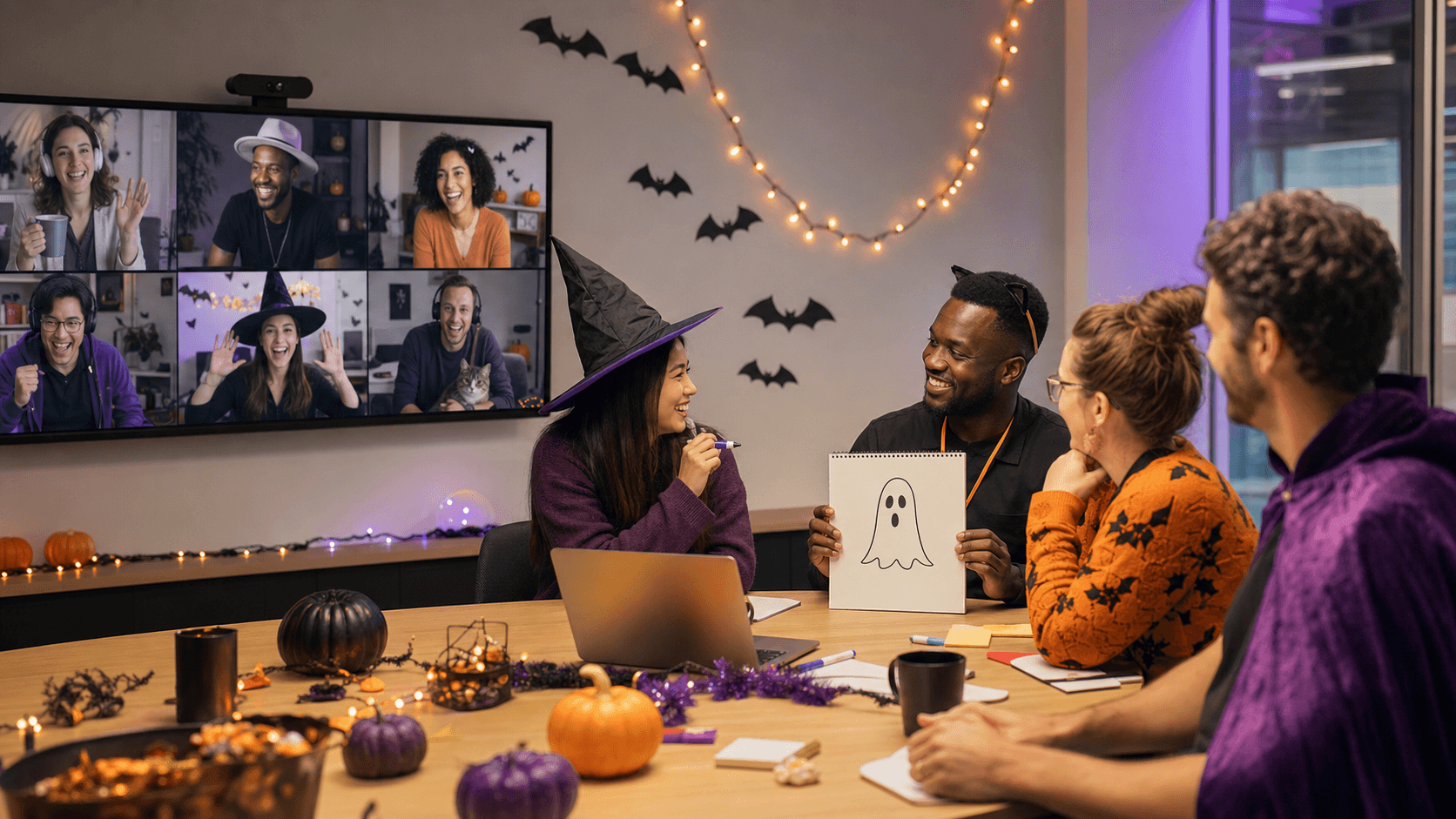
Halloween Pictionary
Write seasonal prompts on cards and split the room into teams. Players draw clues such as “haunted house,” “black cat,” “full moon,” or “trick‑or‑treat bag” while teammates race to guess. A whiteboard works in person; a shared drawing screen works online.
Halloween Games for Adults
Murder‑Mystery Dinner
Give each guest a character, a private objective, and a few facts to reveal during the evening. Release new clues between courses and finish with written accusations. Keep the fictional crime theatrical rather than graphic so the experience stays entertaining for the whole group.
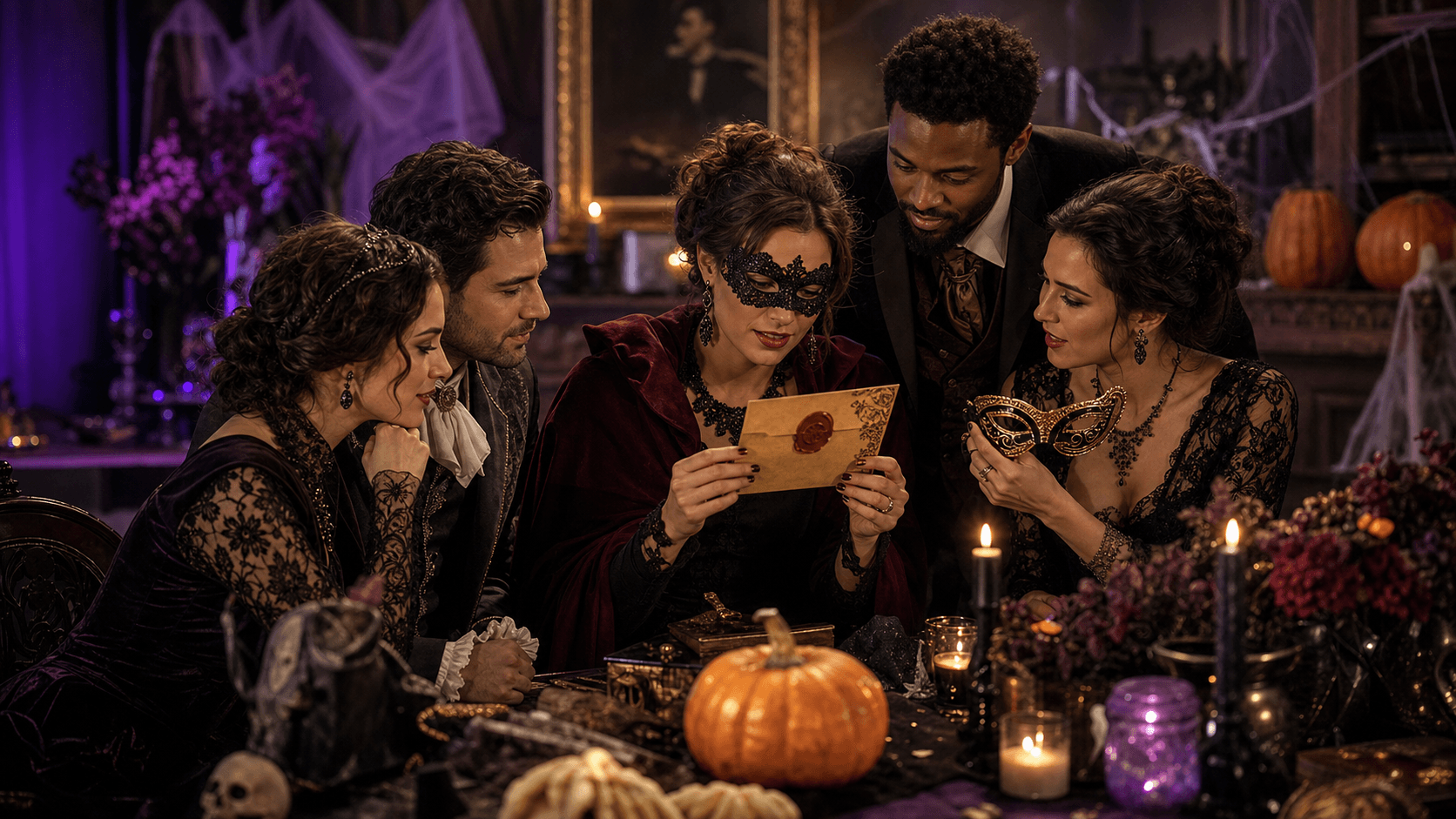
Masquerade Identity Game
Ask guests to arrive in masks or provide simple masks at the door. Each person receives a secret identity and three clues they can share only when asked the right question. Players mingle, trade information, and try to identify as many characters as possible before the reveal.
DIY Escape Room
Turn one room into a 20 to 30‑minute puzzle adventure. Use combination locks, hidden messages, matching symbols, and a final key. Give each team a hint allowance so nobody remains stuck for too long. Never actually lock participants in a room, and keep exits completely clear.
Blind Potion Tasting
Serve small samples of seasonal drinks and ask guests to identify flavors such as apple, cinnamon, cranberry, ginger, maple, or citrus. Include appealing alcohol‑free choices and clearly label allergens. Award points for correct ingredients, funniest tasting notes, or best‑ranked potion.
Tarot‑Inspired Story Cards
Use an illustrated card deck as a storytelling tool rather than a serious prediction. Each guest draws three cards and invents a beginning, twist, and ending from the images. The group can vote for the funniest tale, the strangest ending, or the story most likely to become a horror movie.
Costume Karaoke
Let performers select songs that suit their costumes—or deliberately choose the least appropriate song possible. Offer awards for commitment, choreography, crowd participation, and best character voice. A short sign‑up list keeps the pace lively.
Workplace and Virtual Halloween Games
Spooky Emoji Decoder
Translate Halloween phrases, films, creatures, and traditions into emoji clues. Give teams five minutes to solve as many as possible. Share the clues on slides for a meeting‑room party or in chat for remote participants.
Mystery Sound Challenge
Play short audio clips such as rustling leaves, a creaking hinge, footsteps, an owl, bubbling water, or a howling wind. Participants write down each guess before the answer is revealed. Avoid sudden volume changes, and provide a visual alternative for anyone who cannot comfortably participate by sound.
Memory Tray
Arrange 15 to 25 themed objects on a tray: a miniature pumpkin, striped ribbon, plastic spider, wrapped candy, key, feather, candle, and similar items. Let everyone study the tray for 45 seconds, cover it, and see who can list the most objects. Remote players can study a photograph shared on screen.
Office Halloween Bingo
Create squares based on moments that may happen during the celebration: someone wears orange, a pumpkin appears on camera, a pun costume is spotted, or a teammate tells a ghost story. This version encourages conversation throughout the day instead of requiring everyone to stop work at once.
Virtual Charades
Send each performer a private Halloween prompt and give them one minute to act it out on camera. Keep prompts physically simple and offer a seated category so more people can join. Team scoring adds energy, but a cooperative version works just as well.
Team Trivia
Mix easy questions about folklore, candy, autumn traditions, books, and family‑friendly movies with a few difficult bonus rounds. Broad categories prevent the game from favoring only devoted horror fans. Let teams choose a category for their final question.
Halloween Games for Kids
Ghost Bowling
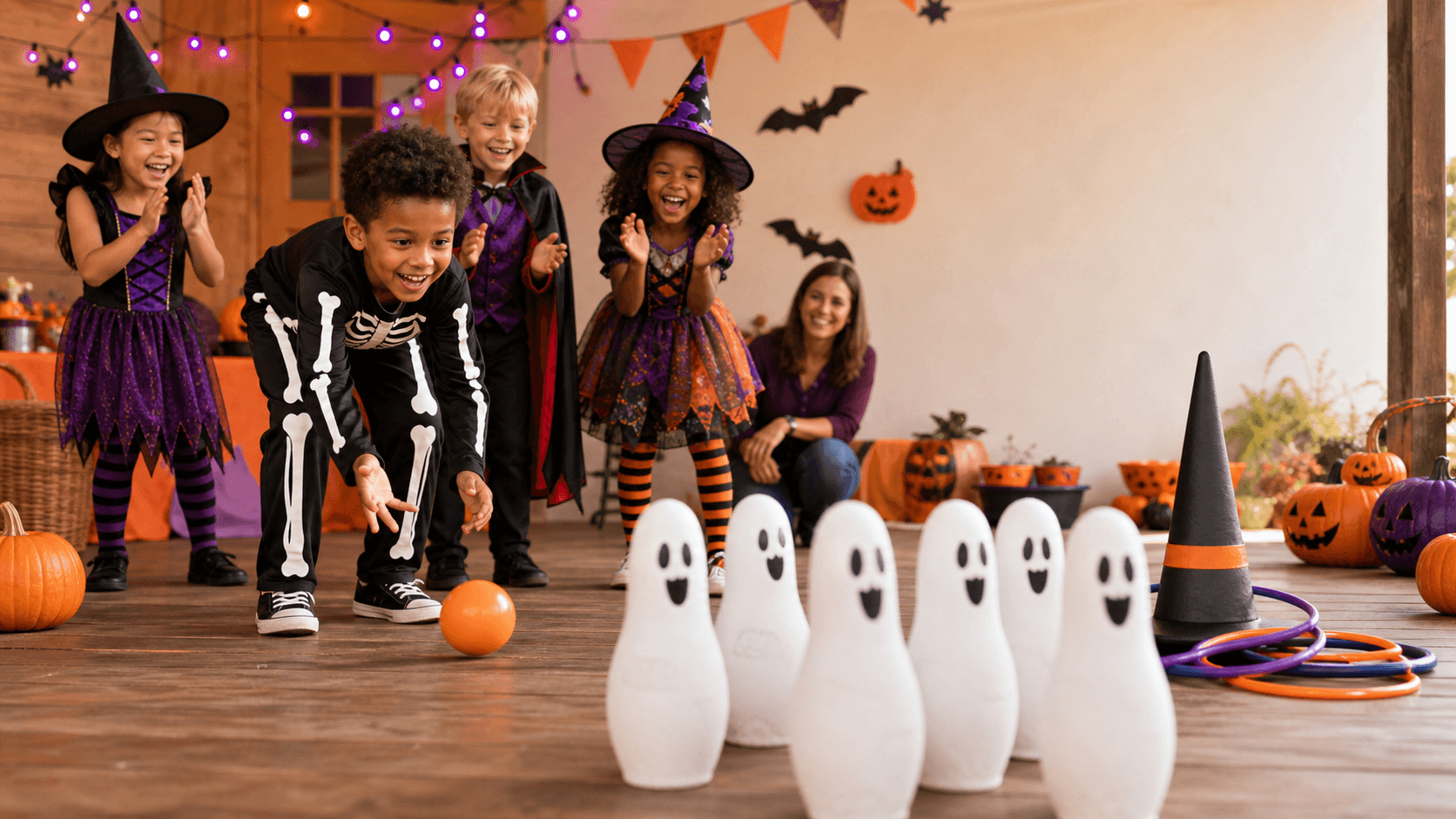
Draw friendly faces on white foam pins or empty plastic bottles and arrange them at the end of a short lane. Children roll a soft orange ball to knock them down. Adjust the starting line for different ages and use weighted commercial pins outdoors so wind does not interrupt the game.
Witch‑Hat Ring Toss
Place one or more cone‑shaped witch hats on the floor and assign points by distance. Use soft rings and allow younger children to stand closer. Glow bracelets can look festive in a dim room, but supervise small children and do not use cracked or leaking glow products.
Eyeball Balance Race
Decorate ping‑pong balls like cartoon eyeballs and ask players to carry them on large spoons along a short course. Add easy obstacles for older children or remove the racing element and make it a cooperative relay.
Spider Puff Race
Place lightweight paper spiders on a long table. Children move them toward the finish line using handheld fans, folded cards, or puffs of air from a clean bulb blower. These options avoid shared straws and keep the activity simple to reset.
Halloween Freeze Dance
Play upbeat seasonal music while children dance like bats, robots, cats, or friendly monsters. When the music stops, everyone freezes. Instead of eliminating players who move, give them a silly pose to perform and let the whole group continue.
Halloween Activities for Seniors and Multigenerational Groups
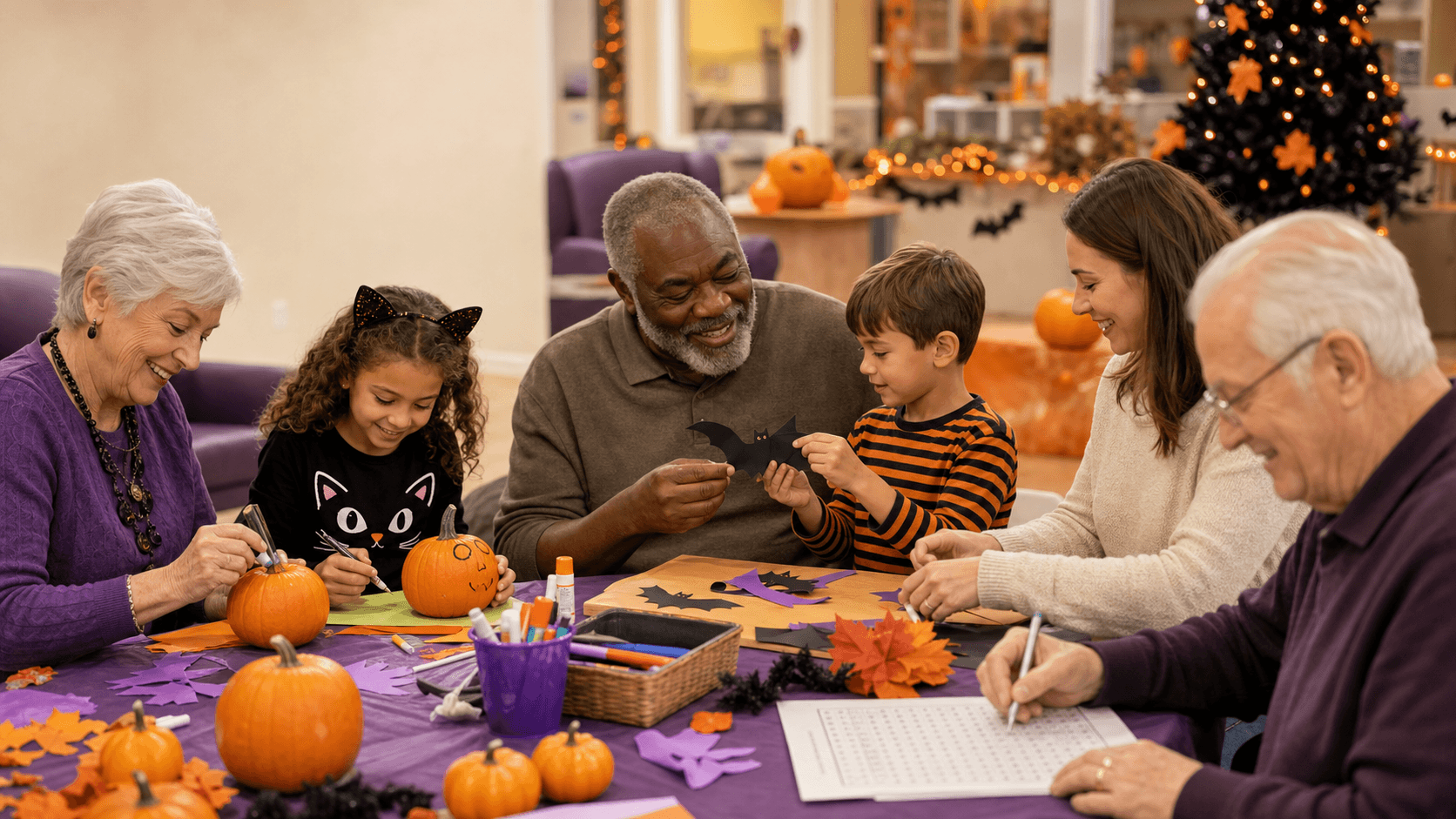
Not every guest wants a loud competition or a fast relay. A craft table with pumpkin painting, paper bats, felt ghosts, and large easy‑grip supplies creates a relaxed place to talk. Large‑print word searches, Halloween trivia cards, recipe swaps, and collaborative storytelling are also easy to enjoy while seated.
Offer activities at different noise and energy levels. Keep walkways well lit, avoid flashing lights unless guests know about them in advance, provide chairs near every station, and make written instructions available in large type. Guests should always be able to skip a frightening element without being singled out.
How to Plan a Halloween Game Night That Runs Smoothly
Choose three anchor activities: one active game, one creative activity, and one relaxed option.
- Put supplies into labeled stations before guests arrive.
- Keep rounds short—about 10 to 20 minutes—unless the activity is the main event.
- Explain rules in under a minute and demonstrate whenever possible.
- Use several small prizes instead of one high‑stakes award.
- Ask about allergies, mobility needs, sound sensitivity, and age ranges in advance.
- Keep food away from craft materials and sanitize shared equipment between rounds.
- Prepare a backup indoor activity in case outdoor plans change.